
8th Mar, 2004
Good real estate agents are easy to find.
They will be committed to the customer, offering outstanding service. They will have access to research databases and the latest marketing toolssuch as the internet.
They will continually educate themselves. They will have a thorough knowledge of the laws and regulations governing property. Ethics will be to the forefront. They will use prescribed documents. Most will belong to their state\'s real estate institute.
For those with marketing skills, they will probably belong to a marketing group such as Natgroup.
Members of Natgroup will have these attributes. The public will have a stronger sense of consumer protection when dealing with members of Natgroup.
Many will have been in business for a number of years. They will be known in the area for their experience and expertise. The activities of these agents range from residential property to selling businesses.
Natgroup\'s offices deal with residential property including houses, flats or units, in a variety of locations. We also operate in the commercial, industrial, retail, property management, rural and business sections.
To assist agents in making informed opinions, most agents are now supported by databases that provide an historic record of current and recent property sales.
Natgroup\'s website - www.natgroup.net - is an excellent sales and research tool.
5th Mar, 2004
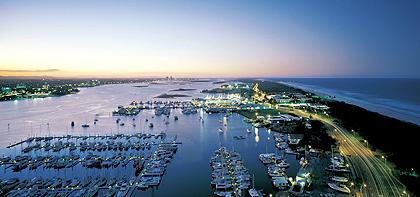 The latest quality of life survey of 215 countries from Mercer Human Resource Consulting has ranked five of Australia’s eight capital cities among the top thirty places in the world for expatriates to live.
The survey, which is conducted annually, is based on the evaluation of 39 quality of life criteria for each city including political, social, economic and environmental factors, personal safety and health, education, transport and other public and community services.
Of all Australian cities, Sydney ranked the highest in equal 5th place (for the second year running) along with Auckland in New Zealand, Copenhagen in Denmark and Frankfurt in Germany.
The next highest ranking Australian city was Melbourne in 12th place, up from 15th place last year. The only other two cities in 12th place were the Belgium city of Brussels and Dusseldorf in Germany.
Perth retained its 20th place ranking for the second year in a row, while Brisbane and Adelaide secured equal 24th place ranking, rising from 31st place last year.
Of all the 215 cities surveyed, equal 1st place went to the Swiss cities of Zurich and Geneva.
Other top ten cities included Vancouver, Canada, Vienna, Austria, Amsterdam in The Netherlands and Munich, Germany.
The French capital Paris, ranked in 31st place, while Tokyo, London and New York ranked in 33rd, 35th and 38th place respectively.
According to the survey, the worst city for expatriates to live was Bagdad in Iraq, followed closely by Brazzaville in the Congo and Bangui in the Central African Republic.
5th Mar, 2004
 One thing that interests people inspecting property is aspect.
Whilst any aspect can be good, a trick of the trade to figure out which direction you are facing is: point the 12 on your watch towards the sun.... roughly half way between the hour hand and the 12 is North. Simple.
Just remember a compass on cloudy days.
4th Mar, 2004
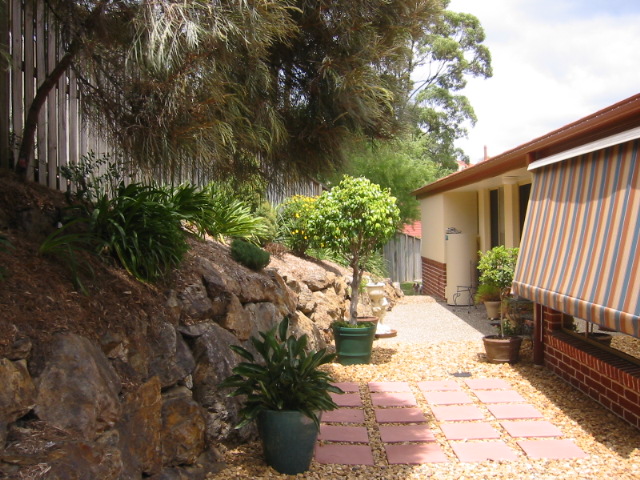 The growing inclination for living outdoors and a more casual lifestyle has meant more priority is being given to outdoor areas and landscaping in our homes. This is especially important if you are planning to (or are) selling your home. Recent studies in the United States have shown the right landscaping can actually increase the value of your home and can definitely make a difference to prospective buyers.
So how much time, effort and money should you put into landscaping your home if you’re thinking of selling?
Like any pre-sale improvements the secret is spending as little as possible to get great results.
If you spend too much on your landscaping you’re less likely to get it back at sales time.
With this in mind, here are a few simple tips to help improve your landscaping and outdoor area and hopefully make them more attractive to potential buyers.
1. The first thing to do is remove any children’s toys or bikes that are laying around and remove any play equipment that may be making your backyard look smaller than it is.
2. Next walk down garden pathways and remove any dead, overhanging or dangerous branches. Also, clean paths if they are mouldy or dirty and replace any broken bricks, pavers or cracks.
3. Look at your fencing. Is it in a good state of repair? If not, make any necessary repairs - replace broken palings, reinforce rickety fencing and repaint as required.
4. If your garden beds and lawn is covered in weeds, remove them.
5. Remove any unsightly, dead or scrawny trees and shrubs and replace with healthier specimens.
6. Add an attractive mulch such as pine chips, pebbles or sugarcane mulch to your garden beds. This will not only help to keep water in and discourage weeds but will also make your garden look neat and well cared for.
7. Remove garden equipment. Put all your garden tools such as your lawn mover, lawn edger and hoses away when not in use. Also, if your budget allows remove your old umbrella style hills hoist clothes line and replace with a retractable line in an area that’s not visible from the back of your house.
8. Finally, make sure your garden includes an outdoor deck or patio area suitable for outdoor eating. A simple and cost effective way to achieve this is to lay a section of paving stones flush up against your home, preferably outside the back entrance. Recycled bricks make perfect pavers and can usually be purchased from your local recycling or garden centre for very little cost.
3rd Mar, 2004
We show you what to expect and how to understand the interest rate cycle. Variable home loan interest rates have been temporarily put on hold as the Reserve Bank assesses the impact of last year\'s rate rises and the soaring Australian dollar.
Most economists say another rise is just months away. A strong recovery in the global economy and rising exports could see another rate hike later this year. The Reserve Bank met on February 3 to consider a rise. But it apparently decided it needed more time to consider the impact of the November and December rate increases.
Why rates have started rising
Over the past few years, the Reserve Bank has kept rates at a level it thinks will provide extra growth for the economy. Now, with most signs pointing to strong economic growth ahead, the Reserve has decided the economy no longer needs that extra help. It expects the Australian economy to grow well in the year ahead because:
Overseas economies are picking up. The US economy is starting to grow strongly again and our economy usually moves in line with the US. Japan and other Asian countries which buy Australian exports are also doing better.
The property market remains strong. Despite clear signs that property price rises are slowing in the key Melbourne and Sydney markets, the overall housing market remains strong.
Where to next?
Most economists say the current rate reprieve will be short-lived, but that rates will probably plateau later this year. \"We think we are either at or very close to the peak in rates in this cycle,\" says ANZ economist Melanie Hay.
\"One of the key reasons for a more modest peak this cycle than in previous peaks is that households have a lot of debt and are very sensitive to higher rates. This means the Reserve doesn\'t have to raise rates as far to achieve the desired slowing effect in spending.\"
What will decide the next move?
Most analysts expect rates to rise this year, in large part because the Reserve has not yet taken away the stimulus that low interest rates have given the economy over the past two years. But estimates of future rises vary. The consensus is that a neutral official rate — one that neither encourages nor discourages economic growth — is about 5.5 percent. That\'s 0.25 percent higher than the current rate.
Two key factors are likely to determine rates during the next year:
The global economy. Global economic factors, specifically the improvement in the US, European and Japanese economies, dominate Australia\'s rate outlook. As economies strengthen overseas, especially the US, the chances of further rate rises here will increase.
Boom-driven housing debt. Despite repeated warnings about the risks of rising personal debt, ordinary (\"household\") borrowers continue to drive up house prices and borrow more. Slower growth in debt will remove some of the pressure on rates. Recent weakness in the housing market likely played a big part in the Reserve\'s decision to keep rates on hold in February.
Play it safe with rates
Rates remain near historic lows and nobody expects rates to rise as dramatically as they have at times in the past 20 years. However, borrowers must recognise that rates do rise.
Tips for beating the interest rate cycle
* Budget for repayments at least two percent higher than you are actually paying.
* Opt for a basic loan with fewer features but a lower rate.
* Pay extra on your variable loan from the start.
*If your budget won\'t cope with many rate rises, now might be a good time to consider fixing. If you can\'t choose between a fixed and a variable rate, consider splitting your loan, with half at the variable rate and half at a fixed rate.
How repayments change
Here\'s how changes in rates will affect the monthly repayment on a $200,000 home loan over 25 years. (Remember, most lenders will alter the length of your loan rather than your repayments.)
Rate Monthly repayment
5.5% $1228
5.75% $1258
6.0% $1289
6.25% $1319
6.5% $1350
6.75% $1382
7.0% $1414
7.25% $1446
7.5% $1478
7.75% $1511
8.0% $1544
8.25% $1577
8.5% $1610
6th Feb, 2004
In a move that was predicted by a majority of economists, the Reserve Bank of Australia left official interest rates unchanged at 5.25% this week, after its first board meeting of 2004.
The decision meant that interest rates will remain steady this month for the first time since November 2003, but this situation is not expected to remain for long with many economists predicting the Reserve’s decision will be reversed and interest rates will be raised as early as next month.
A combination of a strong local economy, lower trending inflation and general slowdown in the housing sector is believed to have contributed to the decision to leave rates unchanged.
Another major influence has been the recent strong performance of the Australian dollar which has risen by more than 35% since the end of 2002.
This month’s decision to leave rates where they are has been welcomed by the Real Estate Institute of Australia and the Federal government who has been pressuring the Reserve over the last few weeks not to raise rates.
President of Real Estate Institute, Kareena Ballard, said, “Today\'s decision is good news for home buyers, particularly those seeking to enter the market for the first time”.
”Buyers and sellers can look forward to a year where housing market growth is likely to be positive, but steady. Further interest rate rises at this stage are not needed to achieve a steady market. A sound property market is part of the backbone of a healthy economy”, said Ms Ballard.
For those concerned about rising interest rates, an option would be to talk to your bank about the possibility of locking in interest rates for a fixed period. Of course, this could mean your monthly mortgage repayments will be higher, but at least they’ll be predictable.
6th Feb, 2004
Last week the Federal Opposition Leader, Mark Latham said if he won office he would elect to live in The Lodge in Canberra and sell the current Prime Minister\'s Kirribilli House in Sydney. This week has seen a quick turn around with Mr Latham saying Kirribilli House with its spectacular views of the Opera House and Sydney Harbour Bridge, is \"a heritage site\" and \"valuable public land\" which \"the Government certainly wouldn\'t want sold\". The 3,000 square metre heritage listed house on more than 6,000 square metres would reportedly fetch around $50 million if sold on the open market.
5th Feb, 2004
Data released this week by the Australian Bureau of Statistics (ABS) showed total building approvals fell by 1.5% during the month of December 2003 on the back of a 6.7% fall in November, while the total value of all building work actually rose during the month.
According to the ABS the total value of all building work in Australia during December rose by 18.7% to $4.32 billion, almost cancelling out the 21.6% November fall in the value of all building work.
Apartment and townhouse building approvals experienced the greatest decline, falling by 6.9% during December 2003, while approvals for stand alone homes fell by an almost insignificant 0.5%.
Chief Executive of the Master Builders Association of Australia, Mr Wilhelm Harnisch, said, “the small recovery in the number of dwelling units approved in December has to be seen against the very sharp drop of nearly 26% in the previous month and the trend estimates which have been negative for four consecutive months”.
“The December building approvals’ data continues to support the view that the new housing market will experience a soft landing rather than a crash,” says Harnisch.
22nd Dec, 2003
Is it still a good time to buy investment property? Housing prices all around the country have had a great run, and with mutterings about interest rate rises, mounting debt burdens and rising vacancy rates, there\'s a sense that now might not be the best time to jump into a big property investment.
As Queensland-based property consultant Michael Matusik points out, there might have been better times to buy - \"maybe three years ago\", he suggests. But he argues there is never a bad time to buy property, not as long as you buy well and are prepared to hold long term - at least seven years to cover at least a whole property cycle.
The potential for capital growth on any specific property is driven by a combination of people\'s buying power and by specific demand for the property itself. Investors don\'t have much control over buying power - that is influenced by the health of the economy and by interest rates. But you can have control over whether your property is likely to have specific demand. In terms of buying power, the good news is that the Australian economy does seem to be on firm ground. \"The fundamentals are strong, unemployment rates are falling and business and consumer confidence is high,\" says Angie Zigomanis, property analyst with economic researcher BIS Shrapnel.
But a healthy economy spells the likelihood of higher interest rates. Indeed the consensus seems to be that interest rates will rise by early next year. Interest rates move in cycles, says Robert Papaleo, director of strategic research at property consultants Charter Keck Cramer, \"and there is only one way they can go from here\".
And while a rise of half a percentage point or so may not cause house prices to collapse, it will certainly not help stimulate further capital growth either. \"An interest rate rise will certainly take the heat out of the market,\" says Papaleo.
Indeed economists point out that it was the halving of interest rates during the 1990s that was largely responsible for the doubling of house prices over that time. So that\'s one driver of capital growth out the window. But a healthy economy does help with what demographers call \"household formation\" that is caused by a combination of natural population growth, migration rates and an environment where young people are in a better position to leave the family home and set up their own households.
According to Rod Cornish, head of property research at Macquarie Bank, all those Gen-Xers that five years ago were staying at home with mum and dad are now reaching a point where they are moving out, either to rent or buy.
Overseas migration is a big driver of demand. A recent discovery that 20,000 more people migrate into Australia each year than originally thought goes a long way to explain why housing markets have been buoyant, says Zigomanis.
Then there is internal migration - from city to city, country to city, city to country, region to region, from suburb to suburb. That has traditionally been influenced by a combination of jobs and the relative affordability of house prices. More recently, as baby boomers increasingly decide on a seachange, lifestyle has become a much more important factor. But affordability still plays a big part in this. For a Sydneysider, buying a waterfront home in Hobart can offer the bonus of extra cash on the swap.
This is where investors can take some control. By studying migration patterns both on a national basis and on a city basis it is possible to identify which suburbs are more likely to continue experiencing buyer demand, even if capital growth as a whole falls away.
And it is still possible to find locations and properties that are undervalued in an otherwise fully priced market, says Matusik, if you look out for suburbs that have the ingredients for future growth but which have not yet been swooped on by the herd.
Cornish emphasises the need to be selective. \"Even when a market is not going up as a whole there will still be opportunities for properties that have a scarcity factor,\" he says.
One silver lining for investors in the dark cloud of rising interest rates is that, historically, as interest rates rise so do rents. That is because first home buyers are even less likely to be able to afford their own home and they may be forced to rent rather than buy.
15th Dec, 2003
Rising house prices caused housing affordability for first home buyers to fall in the September 03 quarter, report the Commonwealth Bank and Housing Industry Association.
Housing affordability compares the average household disposable income to the average monthly first home loan repayment at the average interest rate.
Australia-wide, the median first home price is $320,700 with monthly repayments $1740 or 28.4% of average household income.
The number of first home buyers as a proportion of all home buyers fell to 12.1% in NSW. Just two years ago, first home buyers accounted for 25% of all buyers.
The news of a fall in affordability comes as the Government’s Productivity Commission inquiry into housing affordability considers the 200 submissions it has received from the public, religious groups, government organisations and private sector businesses. The commission will release its initial findings later this month.